Also, menial and manual tasks are eliminated, allowing employees to allocate their time to more meaningful work. Enables inventory control by tracking item quantities and location, offering a complete picture of current and incoming inventory and preventing stock-outs and delays. The module can also compare sales trends with the available products to help a company make informed decisions, boosting margins and increasing inventory turn. Business systems are commonly in place to help organizations with company-wide knowledge, productivity, and efficiency. Because a Digital Certificate uses and supplies us with the tools of cryptographic technology, it provides us with the ability to digitally sign documents or transactions, or to verify the signatures of others. It enables us to make documents or transactions only readable by those that we designate.

Businesses are realizing that customers are long-term assets, and by utilizing an enterprise system they can keep these assets in their portfolio. Cadbury, a global confectioner and maker of the popular chocolate Cadbury egg, also successfully implemented an ERP system. The company had thousands of systems but could not keep pace with its rapid growth and used ineffective warehouse management systems. Some businesses benefit from enhanced real-time data reporting from a single source system. Accurate and complete reporting help companies adequately plan, budget, forecast, and communicate the state of operations to the organization and interested parties, such as shareholders.
Related Services
With OFBiz in place, you can get started right away and then grow your operations as your business grows, without the huge deployment and maintenance costs of traditional enterprise automation systems. Enterprise resource planning (ERP) manages and integrates business processes through a single system. Without ERP, companies tend to operate in silos, with each department using its own disconnected system.
Digital Certificate technology addresses these issues because it does not rely on the sharing of secret keys. Rather than using the same key to both encrypt and decrypt data, https://www.globalcloudteam.com/ a Digital Certificate uses a matched pair of keys which complement one another. In other words, what is done by one key can only be undone by the other key in the pair.
ICS Can Help Ensure That Your EMS System Operates Smoothly
This also means that if less IT capabilities are needed for any reason, those same services can be scaled down. These flexible solutions allow a company to control costs while continuing to meet their customers’ needs. Enterprise resource planning (ERP) systems combine all types of enterprise applications in one package. These applications, most commonly called modules, can all be purchased as a part of an ERP system or separately. These systems are usually built around the customer relationships module and, depending on the business vertical, may include supply chain, inventory and warehouse, HR/labor management, finance, and other modules. Information Technology has become one of the most important resources to operate and manage organizations in the 21st century.
Tape Storage in 2023: What Do You Need to Know? – Enterprise Storage Forum
Tape Storage in 2023: What Do You Need to Know?.
Posted: Wed, 11 Oct 2023 16:34:19 GMT [source]
Enterprise systems (ES) or enterprise application software (EAS) tie together all aspects of enterprise operations and form an information system based on enterprise software packages. Such software supports business processes, information flows, and provides reporting and data analytics to enhance business performance. For example, enterprise resource planning supports the entire sales process that includes pre-sales activities, sales orders, inventory sourcing, deliveries, billing and customer payments. Enterprise resource planning, supply chain management and customer relationship management systems are each examples of enterprise systems. In order to operate efficiently, companies are seeking ways to improve their business processes. Increasingly, companies are looking toward technology, such as enterprise systems, for solutions that improve their workflows and customer service process.
Improve Supply Chain Management
Each enterprise has streamlined work processes that have been running for many years and they face a tough choice whether to upgrade the existing one, integrate a ready-made solution or develop a custom from scratch. Enables effective management of resources, including workforce, finance, and assets. Supports effective management of the product life cycle, from development to disposal, ensuring coordination and efficiency in various phases. It provides automation, tracking, and quotes analysis, along with invoice management, contracts, and billing.
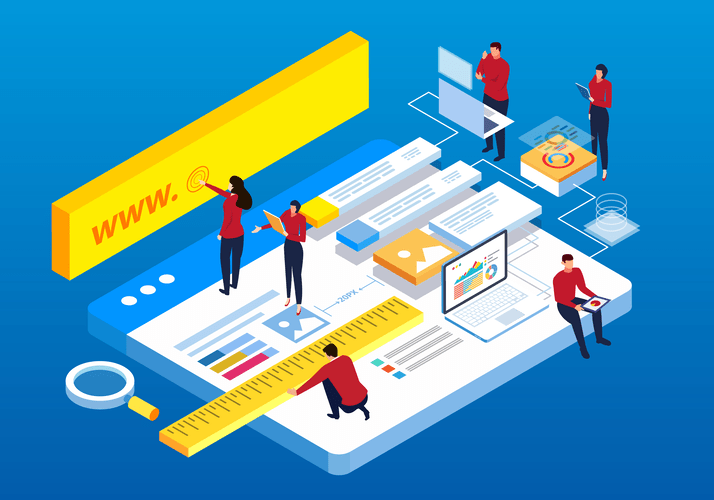
ERP applications also allow the different departments to communicate and share information more easily with the rest of the company. It collects information about the activity and state of different divisions, making this information available to other parts, where it can be used productively. Enterprise application software can handle large amounts of data with a high level of precision. Let’s look at the most popular apps for businesses that implement this type of software. Companies can adjust the ERP system to respond to the needs of different industries such as healthcare, retail, finance, law, architecture, hospitality, etc. Within a given sector, it is possible to customize ERP to create account payables, reports and timesheets to facilitate routine tasks in the organization.
Store Business Data in a Usable Format
Integrating and automating business processes eliminates redundancies and improves accuracy and productivity. In addition, departments with interconnected processes can synchronize work to achieve faster and better outcomes. SaM Solutions provide effective automation and seamless security for your enterprise software. Thanks to it, companies can launch efficient campaigns, improve their content and provide multichannel support to their clients. Salesforce is one integrated CRM platform that lets all departments in a company share data on clients.
Enterprise software development and implementation is a great opportunity to boost employee performance, improve the transparency of the business and operational efficiency of each department. With the help of enterprise software development, accountants run a creditworthiness check and verify other relevant information. As soon as the client is approved, the sales rep automatically gets confirmation which may also include prices and discounts. Also, such modules deal with billing, payment control, receivables, payment of bills from third-party suppliers, financial analysis, and financial reporting.
Types of Information Systems in an Organization
Provided functions are integrated into a single module that makes general management and decision-making easier. It features standard HRM tools as a timesheet, database for employee records, recruitment, and employee evaluations. The core ERP modules include CRM (Customer relationships management), SCM (Supply chain management), finance and accounting, human resources management (HRM), manufacturing, finance and accounting, and business intelligence what are the three primary types of enterprise systems? (BI). We have described the CRM and SCM modules above and are going to take a closer look at the remaining ones. Most have heard the term “enterprise system” but do not have a precise idea of how exactly such systems are integrated into organizations and what functions they are designed to perform. In this article, we will tell what exactly the enterprise system is, how it can help businesses, present its major types and their key features.

It includes a flexible workflow based ticket management system to support sales opportunities, support requests and non conformance reports. It can act as a consolidation solution for all contact information in an organization with full multidimensional classification and built-in LDAP interfacing. Enterprise Resource Planning software is designed to enhance a business’s internal processes. It helps managers’ decision-making process by furnishing them with timely information. Given the high implementation costs of enterprise systems and the fact that most small and medium-sized businesses are less complex, these software packages aren’t usually suitable for such businesses.
Enterprise Management System: Definition, Types & Advantages
Your private information is then encrypted with this secret key, and it can only be decrypted by one of the parties holding that same key. An ERP system doesn’t always eliminate inefficiencies within a business or improve everything. The company might need to rethink how it’s organized or risk ending up with incompatible technology. With third-party integrations it is possible to make payment transactions safer, faster, and easier. With these services, the program can adjust to large-scale business needs without decreasing high standards of performance. For example, marketing staff can use the information from the sales about the most frequent client’s needs, and the sales specialists can benefit from the marketers’ database.
- OpenPro offers business software solutions for every company looking for more value and more features from their ERP solutions.
- It provides thorough data analytics, giving organizations insights into how to build stronger customer relations and improve the quality of service.
- EMS goes beyond this – it monitors competitors, suggests new market areas and methods of attracting new customers, and keeps an eye on a business’s external relationships.
- Each of these modules consists of multiple applications that execute end-to-end business processes.
- Given that the different functions integrated into an EMS system can draw from each other, businesses can streamline their processes and enhance collaboration across various teams, which in turn will create efficiencies.
- You can think of an enterprise resource planning system as the glue that binds together the different computer systems for a large organization.